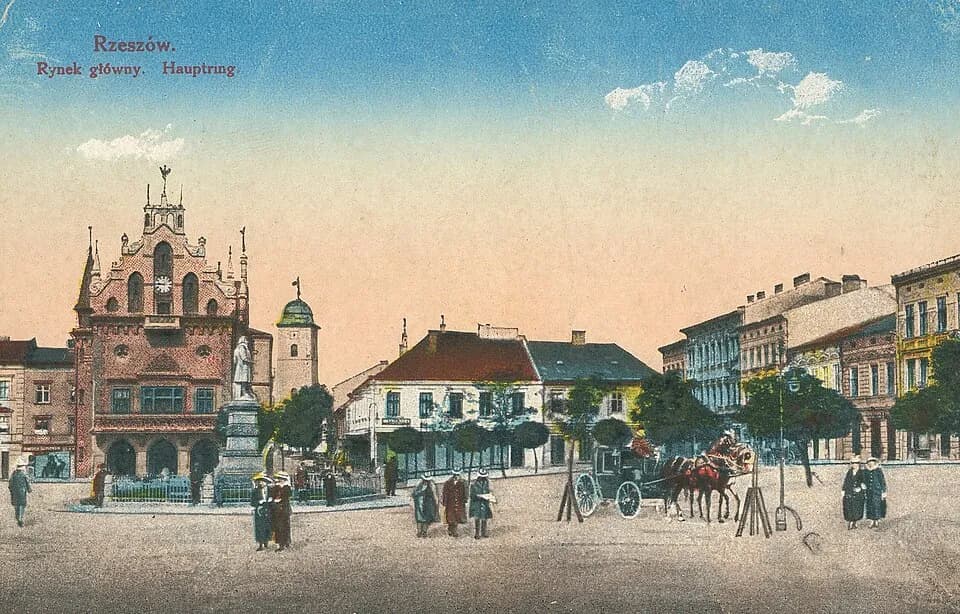
At first glance, Rzeszów's Market Square is exactly what many visitors expect from one of Poland's most attractive regional cities. Colourful townhouses, lively cafés and a welcoming atmosphere make it a natural place to pause and enjoy the historic centre. Yet just a few metres below the cobbled streets lies another side of the city, one that remained largely hidden for centuries.
The underground cellars of Rzeszów offer a fascinating glimpse into the city's past. Rather than a network of secret tunnels built for military purposes, these chambers tell the story of merchants, craftsmen and local families whose lives were shaped by trade and commerce. Today, carefully restored and transformed into an interactive visitor attraction, they reveal how medieval Rzeszów developed into an important trading centre in south-eastern Poland.
A City Built on Trade
Rzeszów was granted town rights in 1354 during the reign of King Casimir III the Great. Its location on important trading routes connecting eastern and western Europe allowed the settlement to flourish, with merchants arriving to buy and sell goods from across the region.
As trade increased, so did the need for secure storage. The solution was found beneath the town itself.
Residents began excavating deep cellars underneath their homes and commercial buildings. The soft loess soil beneath Rzeszów made digging relatively straightforward, allowing property owners to create spacious underground chambers that remained naturally cool throughout the year. These conditions made them ideal for storing food, wine, cloth, spices and other valuable merchandise.
Over the following centuries, citizens expanded their cellars. New chambers were added, neighbouring properties became connected, and in some places, multiple underground levels were created. What began as individual storage spaces gradually evolved into the extensive network that survives today beneath the Market Square.
Practical Spaces Rather Than Secret Passages
Stories of hidden tunnels have long captured the imagination of residents and visitors alike. Local legends speak of escape routes, forgotten treasures and mysterious passages stretching far beneath the city.
The historical evidence, however, paints a rather different picture.
The underground beneath Rzeszów was not designed as a secret labyrinth. Instead, it developed naturally as generations of merchants expanded their storage areas to meet growing commercial demands. While some corridors eventually linked neighbouring buildings, the network was created for practical purposes rather than defence or concealment.
That does not make it any less remarkable. In many ways, the underground reflects the everyday lives of the people who helped shape the city over hundreds of years.
A Refuge in Difficult Times
Although commerce was their primary purpose, the underground chambers occasionally served another important role.
During periods of invasion, fire or other emergencies, the sturdy brick and stone cellars provided shelter for residents. Their solid construction and constant temperatures offered protection when danger threatened above ground.
During the Second World War, parts of the underground are also believed to have provided hiding places for some Jewish residents attempting to escape persecution following the establishment of the Rzeszów Ghetto. This chapter is significant in the city's wider wartime history and reminds visitors that these spaces witnessed not only prosperity but also hardship.
Hidden Beneath the City for Generations
As commercial activity changed over the centuries, many of the cellars gradually fell out of use. Some entrances were sealed, others became filled with rubble, and many people simply forgot how extensive the underground network had once been.
By the middle of the twentieth century, neglect had begun to take its toll. The soft ground beneath the historic centre became increasingly unstable, raising concerns about the structural safety of buildings surrounding the Market Square.
Major engineering and conservation work began during the 1960s, stabilising the underground while archaeologists took the opportunity to investigate what lay beneath the city.
Their discoveries included medieval walls, historic paving, architectural details and evidence of buildings dating from the sixteenth to eighteenth centuries. Archaeological work also uncovered traces connected with the devastating fire of 1842, helping historians better understand how the city evolved through successive generations.
Bringing History to Life
The first section of the underground tourist route opened in 2001, allowing visitors to explore chambers that had remained inaccessible for decades.
Further archaeological work expanded the route in 2007, increasing its length to almost 400 metres.
A far more ambitious redevelopment followed between 2017 and 2022. Supported in part through European funding, the project transformed the historic cellars into the modern Rzeszowskie Piwnice visitor attraction.
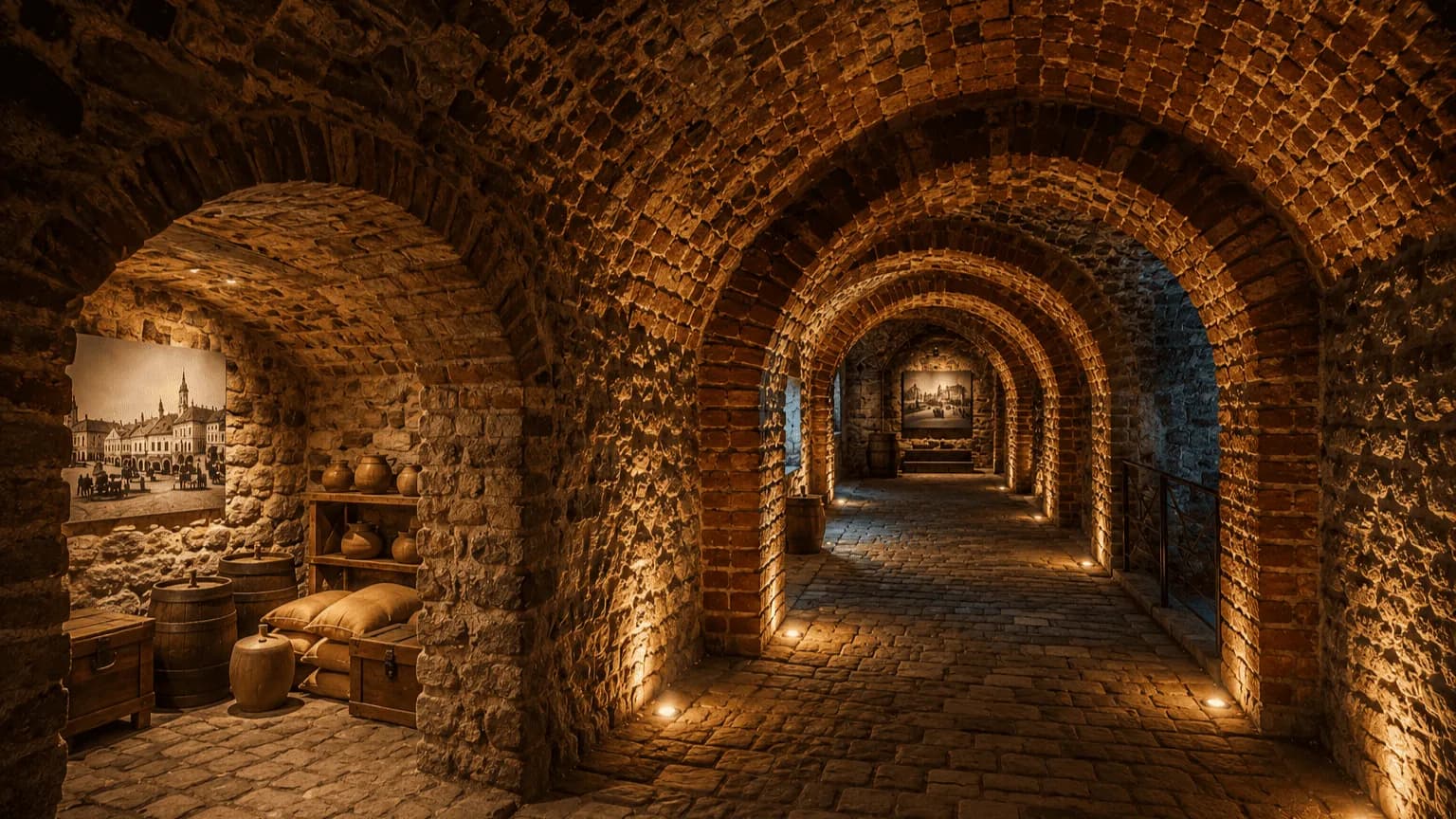
Rather than presenting the underground simply as a collection of old chambers, the exhibition combines original architecture with multimedia displays, immersive lighting, sound effects and digital reconstructions that explain how the city developed over hundreds of years.
Visitors now pass through 25 historic cellars connected by 15 corridors, descending to depths of around ten metres beneath the streets above. Throughout the route, archaeological discoveries sit alongside stories of merchants, residents, and craftsmen whose businesses once relied on these hidden spaces.
An Experience Unlike Anywhere Else
Poland is home to several well-known underground attractions, including the famous Wieliczka Salt Mine and the archaeological museum beneath Kraków's Main Market Square. Rzeszów offers something rather different.
Its underground is not defined by industrial engineering or military history. Instead, it provides an intimate portrait of everyday urban life. Every vaulted ceiling, brick passage and storage chamber reflects the needs of ordinary people who built a thriving trading town long before modern warehouses and refrigeration existed.
The cellars also demonstrate how medieval communities adapted to their surroundings, taking full advantage of the soft loess soil beneath their feet to create practical spaces that remained useful for centuries.
A Hidden Chapter of Rzeszów's Story
Exploring Rzeszów's underground is more than simply walking through historic cellars. It offers a chance to see the city from an entirely different perspective, revealing layers of history that remain invisible from street level.
Above ground, the Market Square continues to bustle with restaurants, cafés and everyday life. Below, centuries-old chambers quietly preserve the story of merchants, trade and the resilience of a city that has continually adapted to changing times.
For anyone interested in the history of south-eastern Poland, the underground cellars provide one of Rzeszów's most rewarding experiences. They are not a mythical maze of secret tunnels, but something arguably even more compelling: an authentic record of how generations of local people lived, worked and helped shape the city that stands above them today.