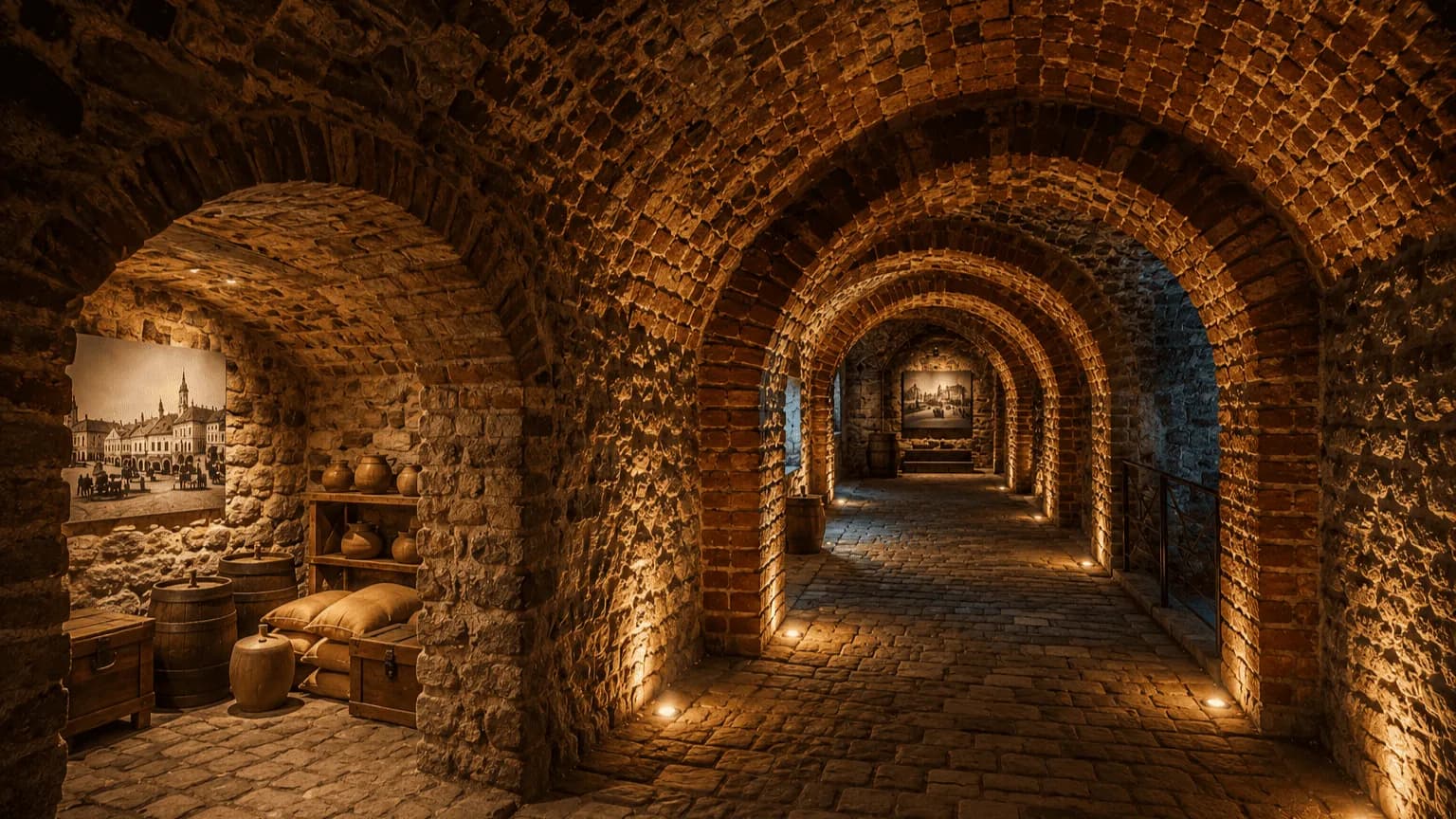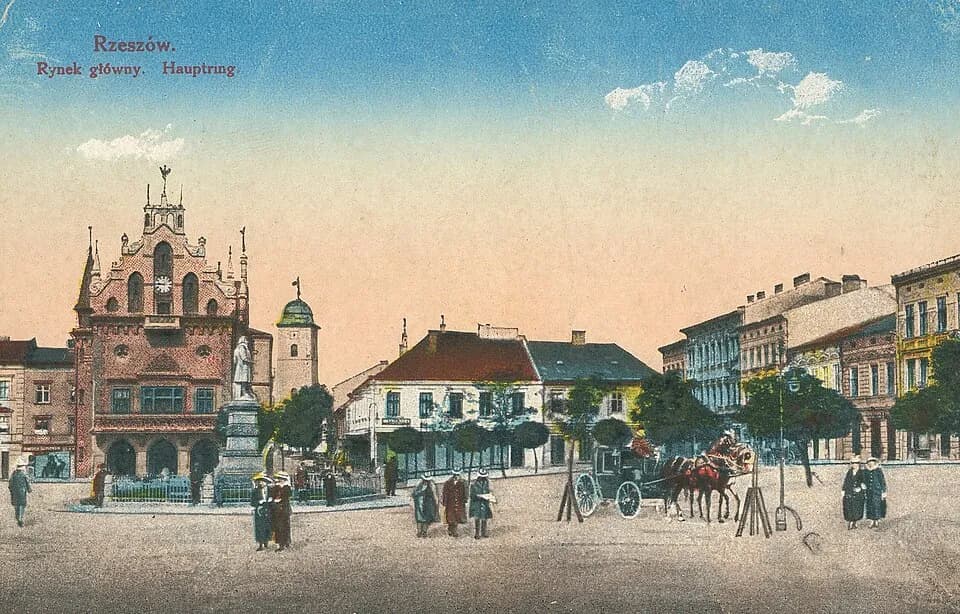
Rzeszów's history is not a single story but a succession of changes, and one museum exhibition brings those centuries together under one roof.
Walking through the history of Rzeszów means moving between very different versions of the same city. Medieval guilds, Austrian officials, Jewish communities, interwar factories and the underground resistance all belong to its story.
The exhibition Six Centuries of Rzeszów at the Rzeszów History Museum brings these layers together across four exhibition rooms. Beginning with the city's incorporation under Magdeburg Law in 1354 and ending with the Second World War, it follows the political changes and everyday experiences that shaped Rzeszów over almost six centuries.
Rather than concentrating solely on major historical events, the exhibition uses the objects left behind by successive generations to show how those changes affected the people who lived here.
From medieval town to an Austrian city
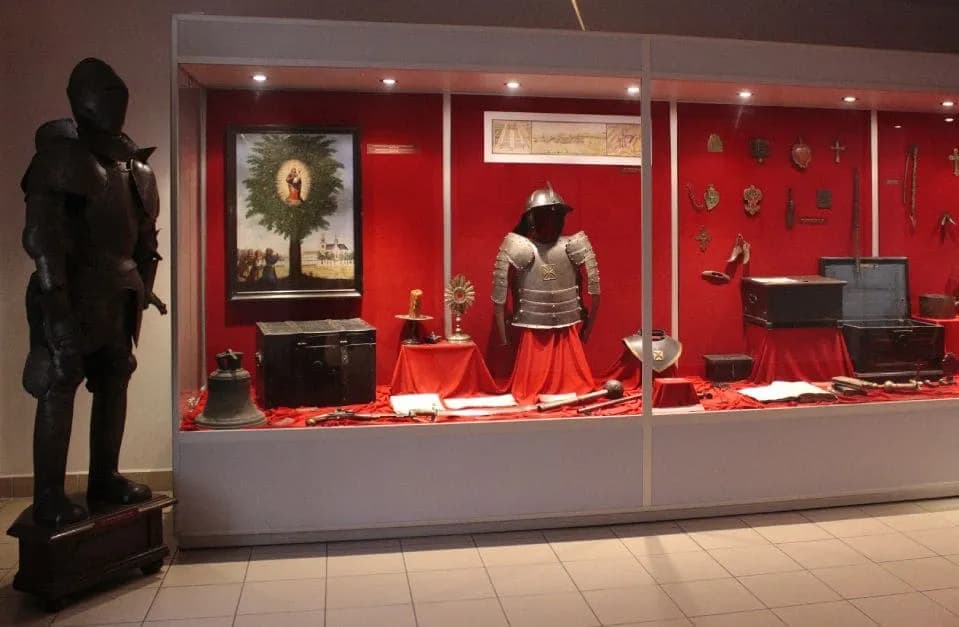
The first room began in 1354, when Rzeszów was incorporated under Magdeburg Law. The objects on display introduce the institutions that governed medieval urban life, including documents, elements connected with the town treasury and the town hall bell.
Religion and everyday work are equally important to this part of the exhibition. Guild artefacts and products made by Rzeszów craftsmen offer an insight into the practical life of the medieval and early modern city, while armour, weapons and other objects place Rzeszów within the wider political and military history of the period.
The story changes dramatically after the First Partition of Poland in 1772, when Rzeszów became part of the Austrian Empire.
Room II explores this long period through the objects of government and administration, including Austrian uniforms, coins and banknotes. But the exhibition also makes clear that Rzeszów was more than an administrative centre.
The period of Galician autonomy encouraged the development of social and cultural organisations, represented through badges and other memorabilia. The exhibition also addresses the city's Jewish community, which formed a significant part of Rzeszów's population during this period. Judaica and objects associated with Jewish religious and everyday life provide a reminder of the diverse community that once shaped the city's streets, institutions and culture.
A model based on Wiedemann's plan offers another way to understand the historical city, showing Rzeszów as it appeared in the second half of the 18th century.
A city transformed by independence and industry
The third room moves into the 20th century, covering the First World War and the interwar years.
This was a period of considerable change for Rzeszów. The exhibition presents military objects alongside material connected with the city's political and social life, including memorabilia associated with Leopold Lis-Kula, a figure closely connected with Rzeszów and the struggle for Polish independence.
The interwar period brought another transformation. Rzeszów experienced economic development alongside an active cultural and social life. Visitors encounter objects connected with the Scout Movement, the Reduta Theatre and the Regional Society of the Rzeszów Region.
Industry is particularly significant. The establishment of factories within the Central Industrial District reflected the wider industrial ambitions of interwar Poland and changed the economic character of the city. Military life also remained prominent, represented by memorabilia associated with the 20th Uhlan Regiment named after King John III Sobieski.
Among the exhibition's most notable objects are the Legions' Shield and Leopold Lis-Kula's sabre, alongside a bust of Lis-Kula from the monument destroyed by the German occupiers in 1940.
The experience of war
The final room confronts the most difficult chapter in the exhibition's chronology: the Second World War.
Here, the focus moves from development to occupation, resistance and destruction. Objects and documents cover the 1939 defensive campaign, the German occupation, the independence underground and the Holocaust.
Among the exhibits is an officer's uniform from the 10th Cavalry Brigade, as well as documents produced by the occupation authorities and the Home Army's Rzeszów District.
The end of the exhibition came in 1944, when German forces abandoned the city in early August. One particularly striking image is the Nazi eagle that was knocked from the castle tower, presented as a symbol of the end of German occupation.
The educational character of Six Centuries of Rzeszów is reinforced throughout the four rooms. Panels provide additional historical context, including a fragment of the 1354 location document and the coats of arms of the families who owned the city. Calendars in each room chart significant events alongside population figures, giving visitors a sense of how Rzeszów's size and circumstances changed over time.
Taken together, these details make the exhibition less about memorising dates and more about seeing connections. Political decisions altered the city's borders and institutions; economic development changed its working life; different communities contributed to its cultural identity; and war left physical and human consequences that remain part of its history.
That is ultimately what makes Six Centuries of Rzeszów valuable as a historical exhibition. Its four rooms do not present a city frozen in the past. They show Rzeszów repeatedly adapting to circumstances beyond its control while developing its own civic, cultural and social character.
For today's city, that longer perspective offers an opportunity to see familiar streets and institutions against a much deeper background. Rzeszów's history is not simply something that happened before the present city existed. It is the accumulated experience through which the city became what it is today.
Visitor Information
Exhibition: Six Centuries of Rzeszów
Venue: Rzeszów History Museum - ul. Rynek 12, Rzeszów
Opening Hours
Monday: Closed
Tuesday–Thursday: 08:30–15:30
Friday: 08:30–17:30
Saturday: Closed
Sunday: 12:00–18:00
Admission
Regular ticket: PLN 15
Reduced ticket: PLN 12